Summary:
- Writer Jeffrey Yang goes on a Raub durian plantation tour, which starts off as a chartered group trip from Singapore travelling through Tuas Checkpoint and on to Seremban, before arriving at Bentong, Raub, and Malacca.
- Highlights include staying in a bamboo villa surrounded by a 5,000-tree durian plantation, indulging in local eats, and learning how premium durian varieties like Mao Shan Wang and Black Thorn are grown and harvested.
- The journey culminates in a durian feast at a Raub plantation, followed by cultural and food stops in Bentong, Malacca, and Yong Peng, with reflections on where the best durians ultimately end up.
We heard about a durian plantation tour to Raub in Pahang, Malaysia. We were interested because Raub is supposed to have the best durians in Malaysia, thanks to the weather and terrain there. So sure, sign us up.
A total of 24 of us left together on a chartered coach from Singapore. Our destination? Bentong. It’s the nearest town from Raub with reasonable accommodations. Ahead of us lies a 10-hour journey, inclusive of meal stops along the way.
The many meals on the way
The first stop after Tuas Checkpoint was Gelang Patah for breakfast. We went to a newer development just off the highway. Behind 4-storey buildings, out of sight from the main trunk road was a huge coffeeshop with about 10 stalls inside, and another 10 stalls outside.
We had dim sum. We got two pieces of steamed siew mai for RM5.50 (~S$1.70), which is comparable in price with the dim sum sold at our Kimly coffeeshops, but we wonder how expensive it is for the locals. We also had pig offal bee hoon, and yong tau foo with pigs blood, a dish that is banned in Singapore.
Advertisement
Other stalls offered the usual: fried kway teow with small over-cooked cockles, wanton mee, mee hoon kueh, thunder tea rice, roti canai, tosai, and economy rice. There was also a seafood zhi char stall, but it’s not open for breakfast.
Lunch was at Seremban 4 hours later, at a huge restaurant called BSBH. It stands for Bau Sua Bau Hai (or Bau San Bau Hai in Mandarin), meaning “cover mountain cover sea”. It’s a way of saying there’s everything here.
The food was excellent. The fried grouper was filleted, sliced, and then deep fried. It was served with strips of pickle on top. This was my favourite dish. They are also famous for crispy roast pork belly, nicely burnt fat char siew, and roast duck with very crispy skin. For carbs, we had a claypot chicken rice.
Arrival at The Waterway Villa in Bentong
We continued our journey till 4pm when we arrived at The Waterway Villa in Bentong – just in time for tea. The buffet spread had banana fritters, jelly, kueh kueh, durian chendol, and the like.
Then at dinner, we had a barbeque buffet. A chef ‘barbequed’ chicken chops and lamb chops on a hot plate, with the rest of the food served buffet style.
In the morning, breakfast was nasi lemak accompanied with fruits like banana and watermelon. All meals came with coffee, tea, cocoa, orange cordial, and fresh kedondong juice. Needless to say, I had at least two glasses of kedondong juice with all my 3 meals there.
Covered pickups brought us to our villas. It was a very pleasant surprise. Each villa was structurally constructed with large diameter bamboo, with walls and ceiling made of rattan mats. Even the bed was made of bamboo.
The thing that fascinated me most was the bamboo sliding door, where the top of the door stiles had holes cut in them and they slide along a timber rail. The bottom of the stiles had grooves cut and slides on a timber track. No ironmongery here. And there’s more. The lock was a hole drilled through the stile, right through to the structure, and a timber dowel, like a chopstick, is pushed through the holes. Fascinating.
These villas were built in the middle of a plantation filled with 5,000 durian trees. We found three durians dropped behind our villa. We took them and opened them with a screwdriver (it was all we had) and we had the best durian ever. It was “wild”, dropped near us, free-of-charge, ripe, and “illegal”. It did not taste great, but the adventure was.
The next morning, we found a very pretty palm-sized yellow tree frog in our bathroom. We thought it was a resident there and left it very much alone.
Then during breakfast, some of our fellow trippers complained that their villas had lots of insects. We had none. It must be thanks to our resident frog. It’s nature’s most efficient, eco-friendly insect repellent.
After breakfast, we toured the plantation on three four-wheeled drive pickups, going up very steep hills on loose gravel roads.
At the summit, we were introduced to a group of Black Thorn durian trees, where a black thorn lies at the base of every durian. These are more bitter and more expensive than the popular Mao Shan Wang variant.
We noticed that durians on the tree were tied by their stem to the branch above, so that when it ripens and drops, it will just hang on the branch for the workers to collect. For trees that are on a steep slope, nets are hung below them to collect the dropped ripe durians.
Also read:
Tired Of Hotel Mooncakes? These Restaurants Are Offering A Unique Spin for Mid-Autumn Festival 2025
Fine-dining restaurants – including those with a Michelin nod – are now wading into the mooncake game with newfangled takes for Mid-Autumn Festival 2025.
Best Specialty Butcheries In Singapore: Where To Buy Premium Meats For Every Occasion
These specialty butcheries offer premium meats, artisanal deli items, and rare cuts not found at your usual supermarkets.
The Raub durian plantation tour
After leaving the villas, we headed to downtown Bentong, located about 45 minutes away. This town is famous for its fragrant ginger and ginger products. One tripper bought 6kg of ginger and another 2kg of ginger powder. It is also famous for its super smooth soya beancurd with brown sugar and ginger.
Another 45 minutes away northwards was the highlight of our trip – the Raub durian plantation. It comprised three huge open sheds where durians are collected after harvesting, sorted, weighed, and sent off in trucks or pickups.
We bought 80kg of Mao Shan Wang durians in 2 baskets, and sat on a long table, and feasted on this long-anticipated indulgence. Durian after durian was opened and placed in front of us. We dug in. After a few pieces, we became a bit more selective. Which is more bitter? Do I tell everyone which is the good one, or shall I keep it to myself?
We had so many durians there that we skipped lunch that day.
Off to Malacca next
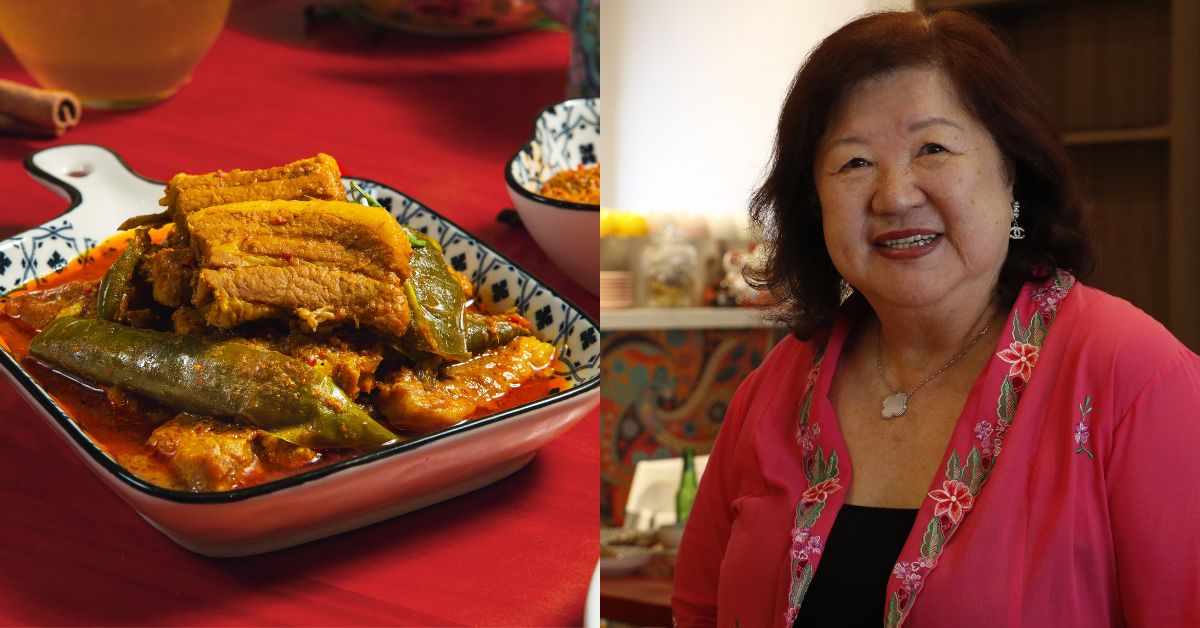
We then headed to Malacca. Dinner was served at Kocik Heritage Nyonya Restaurant. It’s a Peranakan dinner of sambal sea bass, sambal kangkong, ayam buah keluak, chap chye, curry pork ribs, and finished with chendol dessert.
To walk off our dinner, we header to Jonker Street, just behind the restaurant. Everything was same old same old, until we chanced upon a bakery selling sambal petai buns, which is very unusual. We bought 10 buns to share with our travel companions. It had a few whole petai beans with sambal in it. It tasted great.
The next day, after we checked out of our Malacca stay, we headed to Baba Charlie’s to purchase some nonya kuehs to bring back.
Along the way, we stopped at Ming Ang at Yong Peng, which is a huge outlet where coaches stop for passengers to relieve themselves, stretch their legs, have a meal, and buy local products. It is also famous for its baked pastries. Everybody left this place with bags of local products.
Next up is our lunch stop at Hock Hwa Restaurant, also in Yong Peng. It was a huge restaurant which was getting ready for a wedding dinner that night with 100 tables. There, we had sharks fin soup, steamed sea bass, butter milk prawns, kampong chicken, and yam ring. The food was very good.
Some personal conclusions from the trip
- The Waterway Villa was a very pleasant surprise. We loved it. We would not have experienced it if the travel agent did not recommend it. We would simply pass it over if we were to look for a hotel online on booking.com or Agoda.
- Big restaurants in small towns that are big enough to cater for weddings usually have very good food. They are usually further inland from the highway. Their small dishes are still quite large, enough for two people, but good for groups of four persons or more.
- Durians had at the plantation were the average Mao Shan Wang variants we are all used to. We have eaten better ones in Singapore. Our conclusion is that the best durians go to the rich datuks in Malaysia (as told by my Malaysian friends), followed by the upmarket durian stalls in Singapore and China where they fetch high prices. Next in the pecking order are the generic stalls in Singapore and Malaysia. We have not eaten good durians in Malaysia when bought at the usual shops.