Summary:
- Moving to Berlin at 55 became an unexpected reset, forcing the author to relearn everyday independence through solo living, cooking, navigating a new system, and embracing discomfort as growth.
- Life in Berlin reshaped ideas about ageing, showing that staying active, curious, and adaptable matters more than age, whether through walking in winter, backpacking across Europe, or learning a new language.
- Living abroad highlighted the emotional balance of straddling two worlds, deepening appreciation for home, family, and cultural roots while proving that life can still open up and evolve at any stage.
In 2023, at age 55, I swapped Singapore’s hot and humid weather for Berlin’s freezing winters.
I’d been offered a short teaching stint in Potsdam, at a university where I’d taught before. I said yes – partly out of curiosity, partly because the question “What’s the worst that can happen?” just wouldn’t stop looping in my head.
This wasn’t some cushy expat deal, by the way. The pay was much lower than my NGO job back home.
Once at the university, I found myself chatting with students – most barely out of their teens – about rent, cheap eats, weekend trips, and how not to get lost on the train system.
It felt like life had suddenly hit rewind. I was a freshman again trying to learn the basics of being an adult. Except this time, it was as if I was on-set in a foreign film production.
Advertisement
First things first: The food
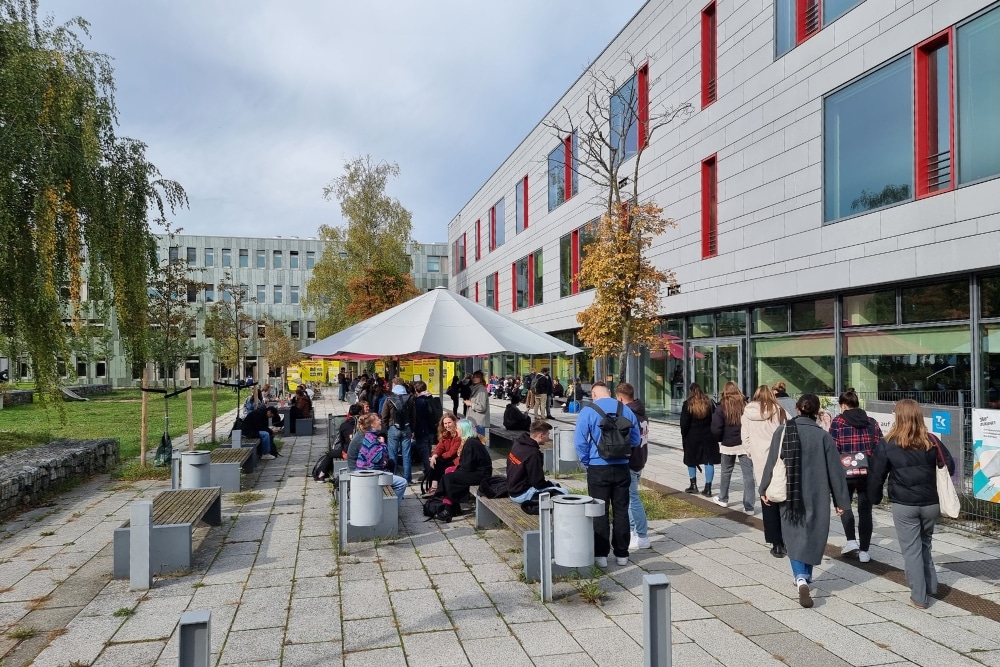
Back in Singapore, grocery shopping wasn’t really my job. We often bought in bulk anyway. In Berlin, though, I had to bundle up and walk 20 minutes to the nearest supermarket, phone in hand, translating ingredient lists, and then walk back with bags that felt heavier with every step. I did all that while also praying hard I didn’t slip on a patch of ice and make a dramatic entrance into A&E.
Yet after a while, I started enjoying those trips. I was exploring new things. There were tomatoes in varieties I’d never seen, mysterious vegetables like kohlrabi, and affordable organic produce. But there are hardly any leafy greens – unless you count frozen spinach.
Sometimes I got overexcited and bought way too much. By the time I hauled everything home, I felt like I’d done a full gym session. My arms would ache, and I’d mutter to myself about how ridiculous this was. After years of coming home to hot meals in Singapore, Berlin’s grocery routine felt like a crash course in mid-life independence.
Cooking was another adventure – that is, once I figured out how to operate the convection stove with touch controls that are seemingly from another dimension. I also had to neatly arrange the spices I brought from Singapore.
I tried to channel my mother. And while my memory was good, my skills weren’t.
After many calls that went, “Amma, how long do I have to simmer the curry?”, as well as watching YouTubers who explained things slowly for people like me, I somehow managed a simple three-course South Indian meal for my German neighbours during Deepavali.
They declared it “Sehr lecker!”. I declared myself a functional adult.

Now I even like cooking. I am going to buy an InstaPot and continue my cooking adventures. Truly, it’s a superpower unlocked.
Backpacking through Europe
Back in my 20s, backpacking through Europe wasn’t an option financially. Now in my 50s and with Europe a stone’s throw away, I now travel around the region with nothing more than a backpack (yes, really).
Flights and trains can be cheap – luggage, not so much. During my initial travels, I dragged a trolley bag around, often up endless staircases at train stations, weaving through crowds and nearly missing connections. It felt like I was in a reality TV show.

Eventually, I ditched the trolley bag for a backpack. My shoulders complained at first, but now I can handle a month-long trip with just one pack – and even run for a train if I need to. My younger self would be impressed. Travel light, travel happy. Apparently, that’s my mid-life nugget of wisdom gained.
Things they don’t tell you about Berlin
In Berlin, sleet is just a part of daily life. People kept telling me: “There’s no such thing as bad weather, only bad clothing.”
And honestly, they mean it. If you don’t go out for a walk in the rain or snow, they genuinely think you’re missing out.
Once I pushed myself to try it, I had to admit they were right. Bundled up, walking through the forest in autumn as well as winter, watching the landscape change – it was oddly calming. And I never feel alone; there are always people walking around, no matter how cold it gets.
The city also took some adjusting. Graffiti is everywhere – on walls, bridges, even trains. At first, it felt messy and chaotic. Now I’m starting to see it differently. It’s loud, emotional, sometimes angry. But it’s also a kind of conversation the city is having with itself.

My studio apartment in Berlin faces the Grunewald forest, and the quiet has become something I genuinely treasure. A colleague once challenged me to try an all-night rave (it’s a thing here) – and maybe one day I will – but for now, I prefer sitting by the window, watching the trees shift colours and shapes through the seasons.
My small dining table doubles as a workspace, and on clear nights, I sit there and just watch the moon. It’s a gentle kind of happiness.

While daily survival is manageable, learning the German language is a whole other journey. I try my best when ordering food, sometimes amusing the staff, sometimes clearly annoying them. I stumble through sentences, laugh at myself, and keep going.
One day I hope to surprise myself by speaking fluently. If not, at least I’m boosting my brain – language learning supposedly delays dementia.
Oddly enough, the more German I learn, the better my Tamil becomes. Something is definitely happening in my head, and honestly, I don’t need to scientifically verify it. It’s just something that happened and I embrace it.
Sometimes I think about my parents migrating in the 1950s. My father attended Malay classes after work; my mother navigated pasar Melayu at Tanglin Halt with pure Tamil confidence.
Their grit helps me when I freeze up at a pharmacy trying to explain a urinary tract infection – an experience now permanently etched into my brain.
Then there were nights when I coughed until 3am. That was when I truly missed my Nin Jiom Pei Pa Koa and also felt the sting of being truly alone abroad.
Also read:
Solo Seniors In Singapore: How It Can Be Liberating, Fulfilling, And Fun
Many assume solo seniors lead isolated lives, but for some, independence brings freedom, joy, and new adventures. Here’s how ageing alone can be empowering if you know how to stay active, healthy, and connected.
Obsessive Compulsive Disorder: Not Just About Being Neat Or Organised
An IMH 2016 study found that 1 in 28 adults in Singapore had obsessive compulsive disorder (OCD) at some point in their lives. What does this invisible disability look like in everyday life?
Berlin’s active agers are inspiring
Berlin has changed how I view ageing. Here, people in their 70s still cycle and many 80-somethings continue to drive. They also carry crates of beer or water up flights of steps.
So when my knees protest after an 8km walk, I don’t think “old already.” I think “ah yes, muscles are awakening.” My Samsung Health app is very pleased with me.
The health system here is used with full German efficiency – emotional, mental, physical care are all included in the insurance everyone pays. Many older folks do Kieser training, a strength programme that is designed to support muscle strength.

Slowly, I’m learning to live independently. I still can’t call Berlin “home”, but it’s growing on me. I like the seasons, the Christmas markets, the museums, the food – from the simple Brezel to the comforting Vietnamese and Turkish dishes you can find everywhere.
And I think I can stay here because I also know this: every winter and summer break, I’ll be on the first flight back to Singapore. I’ll always miss my family, my friends, the food, the festivals – and I think anyone living abroad understands that ache.
Living life backwards hasn’t been about chasing youth. It’s about learning the things I skipped earlier – how to cook, how to travel light, how to navigate a whole new system – and realising that at any age, life can still open up.